
Researchers at MIT World Peace University (MIT-WPU) Pune have developed a new protective enclosure for industrial abrasive saw machines. This innovative technology significantly reduces noise levels by up to 20 dB(A) while also containing sparks, dust, and flying debris, enhancing worker safety and welfare.

'Our research demonstrates the potential of perovskite-based semiconductor technologies for next-generation solar cells and memory devices.'
Researchers have identified a new process, 'chronoferroptosis', where excess iron in neurons reduces their resilience to stress, increasing vulnerability to neurodegenerative diseases. This discovery highlights iron accumulation as a critical target for predicting, preventing, and treating conditions like Alzheimer's.

IIM Indore will conduct a study on teenage cricket sensation Vaibhav Sooryavanshi to understand the impact of early fame and pressure on child prodigies.

IIT Ropar's ANNAM.AI, in collaboration with Syngenta and Google, has launched 'HACK CORE 2026', a national AI hackathon. It invites innovators to develop AI-driven solutions for critical agricultural challenges like crop health, pest management, and climate-resilient farming, offering significant prizes and mentorship.
Scientists from Agharkar Research Institute (ARI), Pune, have developed a biodegradable nanocarrier platform for targeted gene therapy in breast cancer. This strategy uses mesoporous silica nanoparticles to deliver siRNA molecules, effectively inhibiting tumour growth and reducing off-target effects, offering a promising new approach to cancer treatment.
Researchers at MIT World Peace University in Pune have developed an innovative thermal energy storage system using a phase change material (PCM)-based battery. This technology addresses the intermittent nature of solar energy by storing excess heat for use after sunset, potentially reducing reliance on conventional fuels for water heating and enhancing energy security.
A one-day patent workshop was held at CSIR-NIIST to promote intellectual property awareness and equip researchers and startups with essential knowledge in patent filing and innovation.
The Sports Authority of India (SAI) has signed a Memorandum of Understanding (MoU) with Japan's University of Tsukuba to facilitate specialised training and exchange programmes for Indian athletes, coaches, and sports scientists. This partnership aims to enhance cooperation in various sports-related fields and boost India's international competitiveness, especially in disciplines like athletics, archery, table tennis, swimming, and judo.

IIT Bhubaneswar researchers have developed 'ArsenSafe', a portable, low-cost device for rapid, on-site detection of arsenic in drinking water. This innovation aims to address the critical public health challenge of arsenic contamination in groundwater, offering a solution that doesn't require laboratory infrastructure.
The University of Liverpool and the Indian Institute of Science (IISc) have established a joint seed fund to promote research and innovation collaborations in areas such as AI, biomedicine, quantum technology, and space.

Researchers at IIT have developed a novel and cost-effective method for tracking surgical instruments in 3D using standard 2D video, potentially improving the precision and accessibility of minimally invasive surgeries.

IIT Madras, in partnership with Herbalife International India, has inaugurated India's first Centre of Excellence for plant cell fermentation technology. This new facility aims to be a national hub for sustainable innovation, research, and development, focusing on producing herbal biomass, enriched extracts, and high-value phytochemicals, while bridging the gap between lab research and industrial applications.
A 22-year-old woman died after a C-section at a Kota hospital, while other women developed complications. Authorities claim the death was due to heart issues, not infection, and are investigating the cause of the complications.
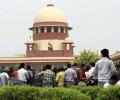
A group of lawyers and activists have petitioned the Chief Justice of India to retract recent Supreme Court remarks that cast doubt on the legitimacy of environmental pleas against developmental projects.
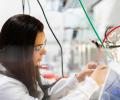
CSIR Director General N Kalaiselvi emphasised the importance of research and applied sciences in developing sustainable solutions for India's energy security and environmental challenges at an international conference on Sustainability Through Fundamental and Applied Sciences (STFAS), 2026.

Deferred payment plans may come with a cost, which may not be immediately visible.

This is one of the coldest temperatures achieved in a research facility in India with more than 80 per cent domestically sourced components.
IIT Madras researchers have developed an indigenous pilot plant in Tiruchirappalli capable of processing 100 tonnes of electronic waste annually. This zero-discharge, single-acid process recovers valuable metals like copper, lead, and tin from PCBs, addressing India's growing e-waste challenge and supporting circular economy initiatives.
IIT Madras researchers have developed an indigenous pilot plant in Tiruchirappalli capable of processing 100 tonnes of electronic waste annually. This zero-discharge, single-acid process recovers valuable metals like copper, lead, and tin from PCBs, addressing India's growing e-waste challenge and supporting circular economy initiatives.

Info Edge, the parent company of naukri.com, has invested over 1,000 crore in more than 50 artificial intelligence (AI) and deep-tech startups since 2020, demonstrating its commitment to fostering India's emerging technology ecosystem.
India's indigenous Dilution Refrigerator, developed by AQV, has successfully reached four Kelvin (-269C) at the Quantum Reference Facility in Amaravati, marking a significant milestone in the country's quantum technology development and cryogenic engineering capabilities.
A new study by King's College London and QIMR Berghofer Medical Research Institute has identified 74 genomic locations, including 39 new ones, linked to anxiety symptoms. Analysing data from nearly 700,000 people, the research highlights the complex interplay between genetics and environmental factors in anxiety development and offers new insights into its biological underpinnings.

Successful interceptor, anti-ship, MIRV and hypersonic technology tests have strengthened India's position among a select group of advanced missile powers.

Sarvam AI, an Indian full-stack sovereign artificial intelligence company, has achieved unicorn status after raising $234 million in a Series B funding round led by HCLTech and Bessemer Venture Partners, with HCLTech acquiring a 10.46 per cent stake.
BIT Mesra has launched 'HimClimX', an AI-powered platform designed for Himalayan climate intelligence and visualisation. It integrates over a century of climate data to offer trend analysis, anomaly detection, spatial visualisation, impact assessment, and AI-driven forecasting for the Himalayan region.

'We're doing a lot of work around work-integrated learning, providing students with every opportunity to take at least part of their education as a practical work-based experience.'

Analysts predict that developments in US-Iran negotiations, fluctuations in crude oil prices, and key global economic data will be the primary drivers of gold and silver prices in the coming week, with a strong focus on talks in Switzerland.

Hero MotoCorp celebrated the 10th anniversary of its MotoSports Team Rally, highlighting a decade of achievements in global rally-raid. The event saw the launch of the "India's Next Dakar Hero" programme, a five-year partnership extension with Dakar Rally organisers, and the induction of young Indian racer Shlok Ghorpade, reinforcing the company's commitment to Indian motorsport talent.

A new Class 9 NCERT textbook describes the judiciary as an "impartial and independent institution" that safeguards citizens' rights and upholds the Constitution, contrasting with a previous Class 8 textbook that sparked controversy over its depiction of judicial corruption. The new textbook was prepared before the Class 8 controversy erupted.
The National Dope Testing Laboratory (NDTL) and Shree Guru Govind Singh Tricentenary (SGT) University have signed an MoU to promote clean sport through joint research, knowledge exchange, and capacity building. This partnership aims to advance scientific research in anti-doping, forensic analysis, and healthcare diagnostics, while also shaping the next generation of professionals in these fields.

The Defence Research and Development Organisation (DRDO) and the Indian Air Force (IAF) have successfully conducted flight tests of the RudraM-II air-to-surface missile, marking a significant milestone in indigenous defence technology.
Researchers at IIT Bombay have developed a DNA-based strategy to make drug-resistant bacteria responsive to antibiotics again, addressing the growing crisis of antimicrobial resistance.

India now ranks among the world's top three destinations for both AI and STEM talent, holding roughly a 6 per cent share of globally mobile AI talent and a 7 per cent share of STEM talent.

AI firm Pramaana Labs, with a significant Indian workforce, has successfully raised $27 million in seed funding led by Khosla Ventures. The company aims to use these funds to advance its unique technology that converts complex knowledge into machine-verifiable truth, addressing the accountability gap in AI across regulated sectors like tax, healthcare, and financial compliance.

Researchers at IIT Guwahati have developed energy-efficient bricks designed to keep buildings naturally cool, offering a promising solution for sustainable construction. These bricks incorporate Phase Change Materials (PCMs) to absorb and release heat, reducing the need for air conditioning and lowering energy consumption.

GenAI recorded the widest talent gap, followed by AI deployment engineering (72.4 per cent), AI governance (70 per cent), and MLOps (68 per cent).

A new series of research papers in The British Medical Journal reveals that global progress in reducing preventable deaths among newborn babies and children has slowed substantially since 2015, with an estimated 4.9 million children dying before age five in 2024, including 2.3 million neonatal deaths.

Mixed-use real estate projects, integrating residential, commercial, retail, and hospitality segments, are gaining significant traction in India as developers seek to maximise returns, optimise land use, and diversify cash flows, with experts predicting 35-40% of urban real estate supply will be mixed-use by 2030.
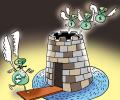
Foreign Portfolio Investors (FPIs) have withdrawn over Rs 62,853 crore from Indian equities in the first fortnight of June, bringing the total outflows for 2026 to Rs 2.87 lakh crore, surpassing the entire 2025 figure, driven by geopolitical tensions, global economic growth concerns, and a weakening rupee.
